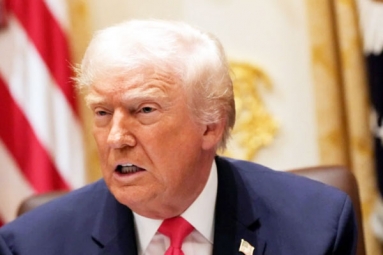
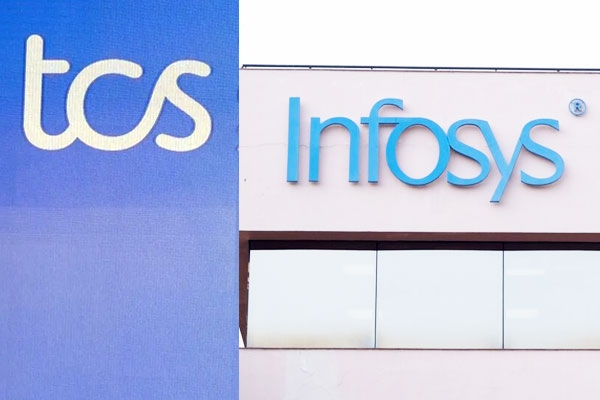
President Donald Trump's requirement of a $100,000 fee for new H-1B employees from abroad could have a harmful impact on the IT outsourcing and staffing sectors, which have been a target for both political parties for a long time. This fee represents the strictest regulation the Trump administration has enforced on the hiring of skilled foreign workers. An analysis by Bloomberg News revealed that this could have a significant negative effect on international staffing companies that serve as intermediaries for firms looking for H-1B workers. Some of these middlemen include Tata Consultancy Services, Infosys, and Cognizant Technology Solutions. Nearly 90% of new H-1B employees at these three firms from May 2020 to May 2024 received approval at US consulates. If this fee had been applied, it would have cost each of them hundreds of millions of dollars. According to the Bloomberg analysis, over 93% of new Infosys H-1B hires during that period, exceeding 10,400 workers, would have been subject to the $100,000 charge, totaling more than a billion dollars in visa fees.
Tata would have incurred the fee for 6,500 workers in that timeframe, which is 82% of newly approved H-1B employees. Cognizant would be required to cover the fee for over 5,600 people, equating to 89% of their new H-1B hires. Even if legal actions manage to quickly prevent the fee, industry experts predict it will lead to a significant decline in visa requests and encourage the placement of more employees overseas. "We are already beginning to see this take place," stated immigration lawyer Jonathan Wasden, who serves many IT employers. "The concern is that if there are truly outstanding individuals in other countries, they are likely to lose out." Some companies believe this fee will not greatly affect their short-term operations. "The recently announced Proclamation is anticipated to have a minor immediate impact on Cognizant's activities," stated Cognizant representative Jeff DeMarrais. "In recent years, we have considerably lessened our dependence on visas, using them mainly for specific technology positions that enhance our U.S. workforce."
Large technology and IT companies have usually been the main users of the H-1B program, which is the main route for foreign workers with at least a bachelor’s degree to secure jobs in the US. They typically claim most of the available 85,000 visa slots each year. Legislators from both the Republican and Democratic parties argue that businesses exploit the program as a low-cost substitute for American labor, even though H-1B workers must receive a "prevailing wage" for their sector, and early-career H-1B workers generally earn significantly above the US median income. Foreign workers, rather than recent international graduates who are already in the country, made up more than 40% of new H-1B hires approved over the last four years, based on data assessed by Bloomberg News.
IT companies benefited from an online lottery set up by officials during Trump's administration in 2020. This process allowed them to register H-1B employees for a small cost and without needing a complex application. The number of entries surged rapidly, exceeding 758,000 qualified registrations in the fiscal year 2024. Officials from DHS, under President Joe Biden, linked the dramatic increase in entries to IT consultants exploiting the system before it was revamped last year. The $100,000 fee introduced by Trump serves as a harsh measure to prevent those businesses from participating in the program. White House spokesperson Taylor Rogers stated that this move will provide American companies looking for skilled workers with greater stability and discourage businesses from flooding the system and reducing wages.
Various states and business organizations have initiated different lawsuits against the Trump fee, including one led by the US Chamber of Commerce. A hearing is scheduled for this week regarding a request to block the fee or examine its legality. Many employers are not waiting for the legal proceedings to conclude before revising their hiring strategies.
The IT consulting sector had already reduced its intake of new H-1B workers since 2024, and this new fee will likely push more positions to be filled abroad, according to Steve Hall, chief AI officer at Information Services Group Inc., a tech research company that provides guidance on IT outsourcing. He predicts that US companies will probably increase investments in India, which is where many H-1B workers come from, over the next five years. "If you want to tap into the best talent globally, you need to go where that talent is," he explained. Most of the ten largest H-1B employers chose not to comment on how the fee might affect their hiring strategies.
A spokesperson for Infosys pointed out remarks made by CEO Salil Parekh in October, noting that a small portion of the company's US staff needs sponsorship for their jobs. Parekh mentioned that the company's relationships with clients would continue "without any disruption to their services today and in the future." IBM Corp., which hired 88% of its H-1B employees from overseas, stated that its approach to high-skilled immigration has changed over time, according to spokesperson Miki Carver. "Our priority is to ensure we possess the right skills to meet our clients' changing needs," Carver added. Ron Hira, a political scientist at Howard University and a critic of the H-1B program, indicated that while the fee is a positive development, employers will find ways to adjust. He suggested that the lottery next April will provide an early indication of its effectiveness, asking, "Will that produce a group of higher-skilled, higher-wage applicants? That will be the first sign."
Some of the largest H-1B employers intend to refrain from entering workers needing visa processing at consulates into the lottery, said Finn Reynolds, director of market research at legal tech startup Lawfully. He mentioned that this hiring trend will likely spread across industries until there is more clarity regarding the $100,000 fee.
The new expenses, along with a suggested change to the Trump lottery, might reduce the number of participants in next year's lottery by between 30% and 50%, according to Lawfully. Companies will need to consider the fee's price and the chances of workers in the new selection process, Reynolds mentioned. "The Trump administration's fee of $100,000, together with the new lottery rules, has established a completely different range of motivations that will alter how the market acts regarding the H-1B lottery," he stated.